Organic vs Paid Social Media: Key Differences
If your business isn’t investing in social media marketing in 2026, you might be sacrificing success - because over 71% of people say that socials are a part of their buyer journey. But with phrases like “organic social media” and “paid social media”, starting your social media journey as a business can feel complicated. So let’s uncomplicate things with a breakdown of what organic and paid socials are, what makes them unique, and how they can be combined to build an effective social media strategy.
Because understanding organic social media AND paid social media is vital to balancing trust with action - leading to wider reach, more authentic engagement and valuable conversions that help your business succeed.
Whether you’re a small business owner looking to expand, or you’re a content creator looking to understand more about socials, you’ll find all you need to know about organic and paid socials here.
What is Organic Social Media?
Organic social media is the unpaid content that you share to your feed. It usually exists to provide value to your target audience, establish trust, evoke community engagement and build authority as a business.
This could range from evergreen content (informative carousels, how to reels, customer feedback) to quick action content (giveaways, sale announcements) and even fun content (topical memes, adapted trends, newsworthy content).
Quickly put, organic social media is the content that people see when they click on your profile.
Benefits of Organic Social Media
We’ve established that organic socials can help build trust, but here are some other benefits of organic social media:
Establishes brand authenticity
Provides a platform where you can reflect brand ethics through the messaging you share and your actionsImproves audience relationships and loyalty
By creating and delivering high quality content that’s personalised to your target audience, those you reach feel an increased connection to your brandSupports long term brand awareness
Through repeated, targeted visibility, you’ll notice that as your reach increases, so too does the amount of organic feedback for your brand (through reviews and user generated content)Cost effective long term strategy
Organic social media means you’re working with an engagement based algorithm over a bid based ad structure, making it ideal for businesses with small marketing budgets to improve their visibility
The Downside of Organic Social Media
Fact of the matter is, organic social media is a great way to really drive connection with your audience, but it’s not without its downsides.
Firstly, organic socials are bound to algorithms that change like the tide. This can have a significant impact on your overall reach if you’re not aware of the changes being made. This is where your engagement strategy can offer you a huge helping hand.
Secondly, it’s a huge investment in time and effort. Creating a content strategy, plan, and then the content itself takes a tonne of research and content creation skills. This takes time, practice and expertise.
Finally, organic growth can feel slow - especially when compared to paid ads!
Does Organic Social Media Still Work in 2026?
To be perfectly frank, social media reach for businesses is down among followers. But with new updates such as integrated SEO (search engine optimisation) and trial content options, it is still possible to push the boundaries of your industry with organic socials.
In order to grow with organic social media, you need to be able to spot the trends before they happen, invest real time in connecting with your audience, and express uniqueness through every aspect of your business’s online presence. So if you’re looking to go the organic route, be prepared to dedicate a huge chunk of time towards it, or work with a social media professional that understands the intricacies of your business.
What is Paid Social Media?
Paid social media covers both sponsored content and advertisements across social media. They’re usually designed to highlight products, services, and sales, with the aim of gaining new customers.
Paid social media content includes boosted posts, display ads, video ads, and carousel ads. Usually the kind of content used in paid socials is subject to the platform and target audience preferences.
In short, paid social media is a form of digital advertising.
Benefits of Paid Social Media
You already know that it can help put your business front and centre, but here are some more benefits of paid social media:
Immediate reach and visibility
Unlike organic content, paid content is pushed out to your target audience the moment that you hit publish, because you’re investing in a premium placement on the platformAdvanced targeting options
Something that paid socials allows you to do is filter demographics, interests and audience behaviour, which helps further define your target audience and place the ad in front of the right peopleFaster lead generations and conversions
Paid ads are designed to build urgency in your target audience, and when well executed, can generate sales and leads in the matter of hoursMeasurable and scaleable
With real time data, A/B testing and the option to increase the longevity and ad spend, paid social media puts you in charge of how your content performs
The Downside of Paid Social Media
While there may be many benefits to paid socials, there are a few downsides that prevent it from being the go to form of social media business promotion.
First of all, paid social media requires an ongoing budget. With A/B testing and prolonged ad spend, you have to be prepared to invest in unforeseen results. For small businesses and those just starting out, this may seem like an incredible risk - especially given the fact that the ROI (return on investment) is not yet established.
Secondly, paid social media stops delivering results when the ad spend stops. As soon as your assigned budget is spent, your paid content loses visibility, meaning your reach, engagement, leads and sales suddenly slow down.
Finally, paid social media relies on ongoing optimisation and testing. This requires expert knowledge of social media advertising, as well as your target audience. It can be very time consuming, and might not always turn out the way you’d hoped.
Do You Need Paid Social Media to Grow?
Small businesses and creators often feel a pressure to pay for ads in order to compete with their larger corporations. But while paid social media is great for discovery, it’s not necessarily a must have.
Truth is, social media provides an opportunity for everyone to build themselves up in front of a live audience - however this takes a lot of research and a significant amount of trial and error. So while paid socials aren’t a requirement, social media is still going to be an investment of time (unless you hire a social media manager of course).
Organic Socials vs Paid Social Media: Key Differences
You may have noticed that while organic and paid content both share a home on social media, they’re wildly different. Here are the key differences that set organic and paid social media apart:
Paid vs Organic Reach
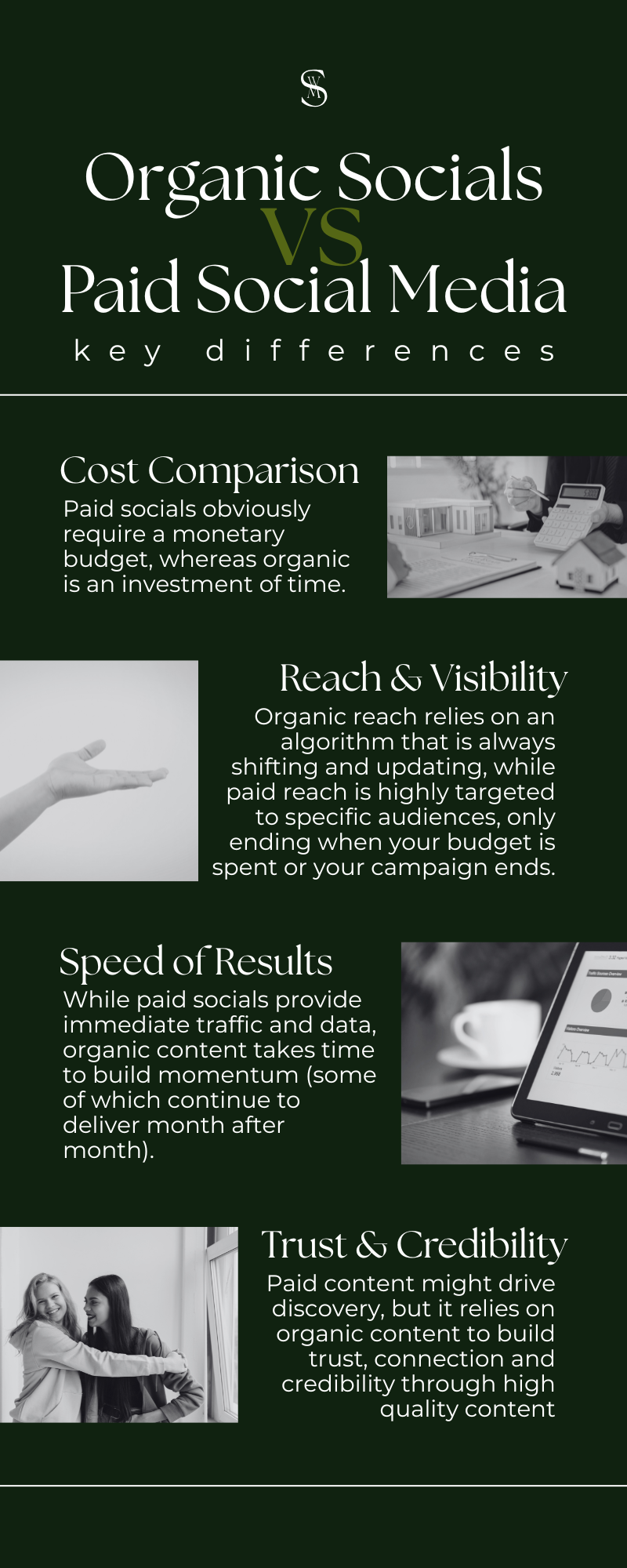
While paid social media reach is highly targeted, organic reach works a little differently - this is because it relies on algorithms.
The typical algorithm will share your content with accounts that have shown interest in your niche (specialised section of your industry), and expand the audience based on engagement. This is why a content hook can make or break the performance of your content.
Additionally, your content can gain organic reach through searchability. You see, social media also acts as a search engine for associated content. This means that the right word or phrase in your caption can put your content right in front of someone who’s actively searching for you.
So while paid content may end with ad spend, organic content - especially evergreen content - can continue to yield results long after it’s shared.
How Organic and Paid Social Media Work Together
We know that organic and paid socials can work as standalone promotion for your business, but do they work well together?
The short answer - yes.
When your social media strategy is made up of both organic and paid content, your business builds trust WHILE driving traffic and discovery. As complex as this kind of strategy may seem, it means that people coming across your business for the first time via ads, can feel safer shopping with you when they click on your page to learn more about you.
Honestly, when organic social media and paid social media form an integrated strategy, magic happens.
Thinking about an integrated strategy for your social media, but not sure if you can dedicate the amount of time it requires?
It’s high time you spoke to a social media manager that combines performance with strategy to help your brand stand out from the crowd - and wouldn’t you know it, you’re in the right place!
With more than 13 years of experience in marketing and social media management, I create strategies that support your goals with both organic and paid social media elements.
Start your journey to social media success today with Socials With Michelle.